
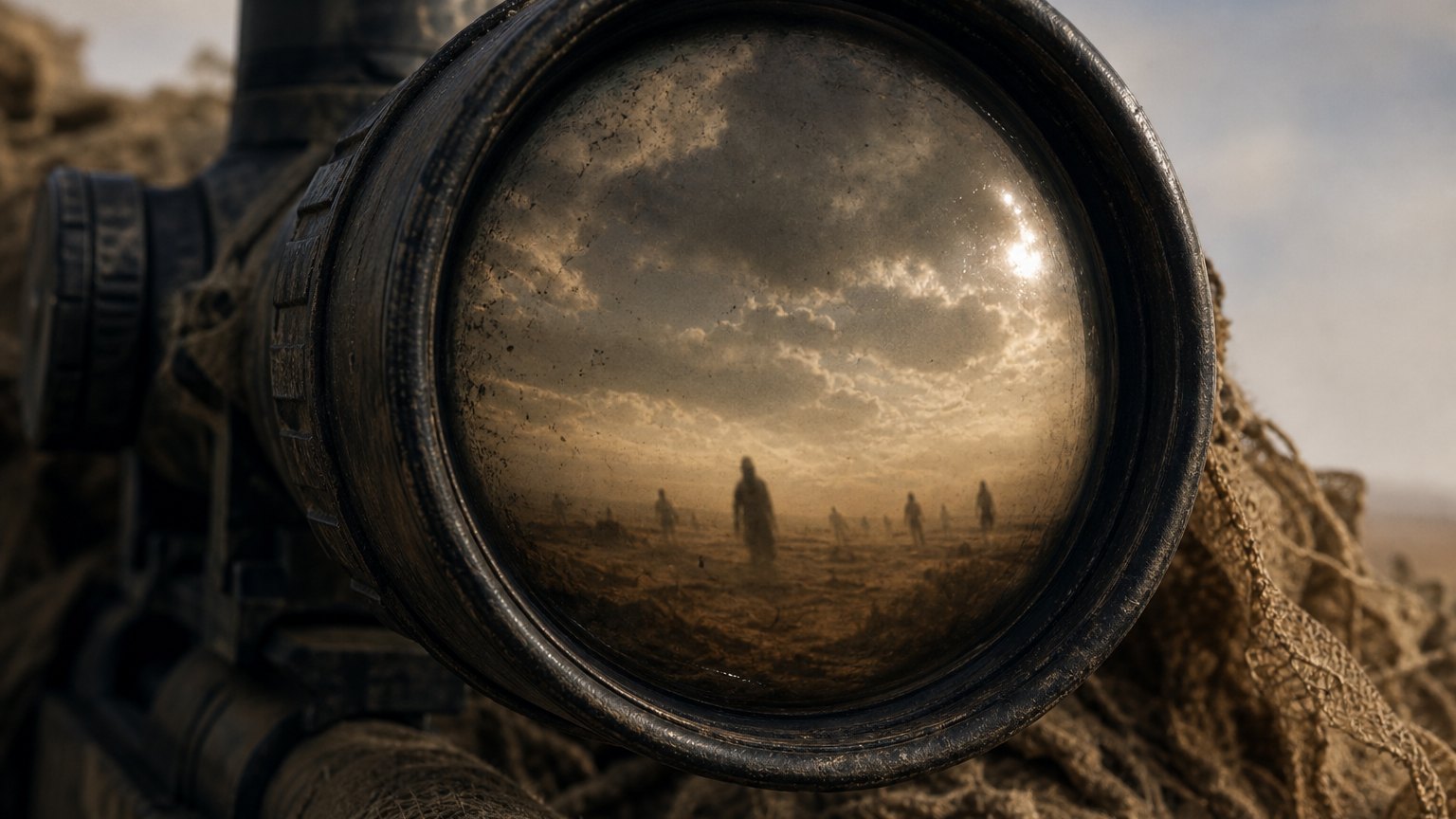
In the sprawling, often male-dominated landscape of modern blockbuster horror, it is a rare and welcome sight when a director voluntarily steps back from the colossal scale of franchise filmmaking to reclaim the intimate, jagged edges of their indie origins. Adam Wingard’s latest project, Onslaught, represents exactly that kind of pivot. After spending years navigating the massive visual effects suites of the Godzilla franchise, Wingard has reunited with his longtime collaborator and writer Simon Barrett to return to the grounded, character-driven tension that defined their earlier work. The result, an A24 release slated for September 4, 2026, feels less like a return to form and more like a recalibration of power dynamics in the genre.
The Sniper and the Super Soldier
At the center of this cinematic recalibration is Adria Arjona, who headlines the film as an Army sniper thrust into a nightmare scenario. The premise is deceptively simple yet loaded with visceral stakes: a rogue squad of genetically engineered super soldiers breaks loose in a desolate desert setting, and it is up to Arjona’s character to protect her daughter. This setup immediately shifts the lens from the typical 'final girl' running for her life to a mother who possesses the lethal skill set to not only survive but dismantle the threat. It is a narrative choice that honors the physical agency of women in horror, moving beyond victimhood into the realm of tactical, maternal defense.
The supporting cast reinforces this grounded intensity. Rebecca Hall, Dan Stevens, Michael Biehn, Reginald VelJohnson, Eric Wareheim, Drew Starkey, and even UFC fighter Alex Pereira lend their talents to a story that draws inevitable comparisons to The Guest, the 2014 thriller that also featured Stevens. However, Onslaught distinguishes itself by placing a woman’s survival instinct at the apex of the violence. The Motion Picture Association has already assigned the film an R rating, citing strong bloody violence, gore, sexual material or nudity, and language. While these elements signal a commitment to unflinching horror, the presence of sexual content alongside brutal gore invites a critical conversation about how female bodies are framed within such extreme contexts. Does the film exploit, or does it contextualize the violence as part of a larger struggle for bodily autonomy?
A Return to Gritty Realism
Wingard and Barrett’s history suggests a filmmaker who understands that horror is most effective when it feels tangible and close. By stripping away the CGI-heavy spectacle of recent years, Onslaught promises to deliver a gritty, atmospheric experience where the desert itself becomes a character—harsh, unforgiving, and silent. Arjona’s character must rely on her training, her wits, and her love for her daughter to navigate this hostile environment. This is horror that respects the intelligence of its protagonist, allowing her to be the architect of her own salvation rather than a passive participant in her terror.
As we await the theatrical release in 2026, Onslaught stands as a testament to the evolving nature of horror storytelling. It is a genre that continues to carve out space for women not just as survivors, but as warriors, mothers, and complex agents of their own fate. Wingard’s return to his indie roots may be the backdrop, but it is Arjona’s performance that will likely define the film’s legacy in the canon of women-in-horror cinema.
Comments (4)