
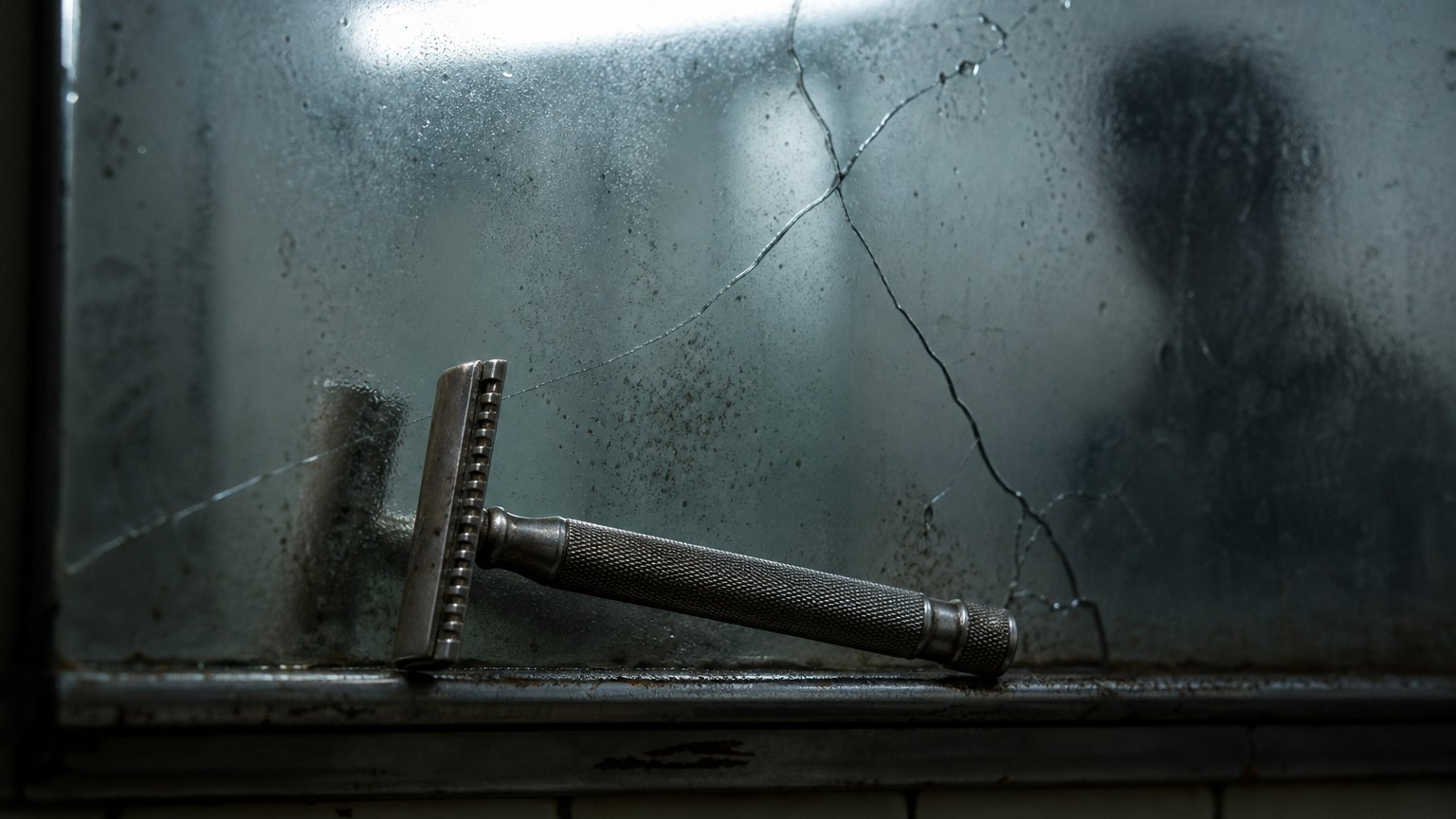
In a genre often saturated with male gazes and passive victimhood, the announcement that principal photography for Shaving wrapped in March 2026 arrives as a breath of fresh, albeit chilling, air. Directed by Kim Jeong-hoon and produced by Star Platinum Co., Ltd., this horror-thriller is not merely another slasher entry; it is a psychological excavation of the self, starring Roh Jeong-eui, Sho Kasamatsu, Byun Yo-han, and Shin Ryu-jin. The production company’s May 8, 2026 announcement of a second-half 2026 theatrical release signals a bold confidence in a film that refuses to shy away from the messy, visceral reality of healing.
The Blade as Metaphor for Survival
Traditional horror often treats violence as spectacle, but Shaving frames its central imagery through a lens of intimate vulnerability. The title itself is deceptively domestic, evoking the quiet, ritualistic moments of grooming that are frequently coded as feminine labor. Yet, in the hands of a director known for atmospheric tension, shaving becomes a potent metaphor for the careful, painful process of removing the layers of trauma that survivors are forced to carry. It is about exposing the raw, tender skin beneath the callus of everyday life.
Roh Jeong-eui, whose previous work has demonstrated a remarkable capacity to portray resilience without resorting to stoicism, anchors the narrative. Her performance promises to explore the duality of fear and love, suggesting that the most terrifying monsters are not external entities, but the internalized echoes of past pain. Byun Yo-han and Sho Kasamatsu join the ensemble, adding layers of psychological complexity that challenge the notion of the 'final girl' as a solitary figure. Instead, Shaving appears to investigate how love and fear coexist, how they can be both the source of our wounds and the mechanism of our recovery.
Reclaiming the Narrative of Fear
What makes this announcement particularly significant for women in horror is its thematic commitment to exploring trauma not as a plot device, but as a lived experience. The film’s description as a psychological horror thriller suggests a slow-burn approach to dread, one that prioritizes emotional authenticity over jump scares. This aligns with a growing movement in genre cinema where female directors and producers are reclaiming the narrative of fear, transforming it from a tool of oppression into a language of empowerment.

As we await the film’s theatrical debut later this year, Shaving stands as a testament to the power of horror to articulate what is often left unsaid. It invites audiences to look into the mirror and confront the reflections of their own fears, reminding us that survival is not just about escaping the monster, but about learning to live with the scars. For survivors and horror fans alike, this film offers a rare space where vulnerability is not a weakness, but a form of strength.
Comments (4)